
Anchorage Municipality Death Records Lookup
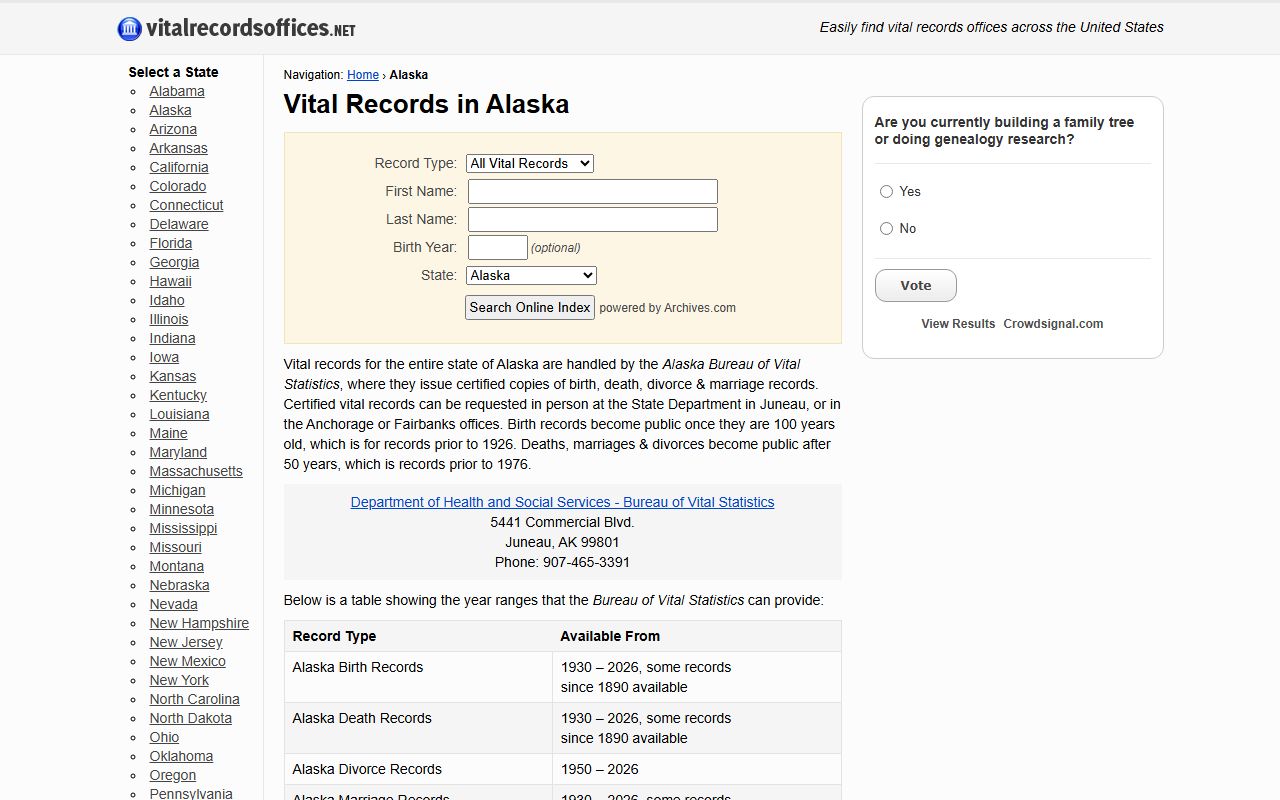
Anchorage Municipality death records are issued by the Alaska Health Analytics and Vital Records Section, which operates a walk-in office right in Anchorage at 3901 Old Seward Hwy. The Municipality is Alaska's largest borough, and its records span from early territorial-era coroner files dating to 1900 through current certified death certificates. This page covers where to get records, what each source contains, and how to search Anchorage-specific collections like the Public Library obituary index and the Memorial Park Cemetery burial list.
Anchorage Municipality Overview
Who Handles Anchorage Municipality Death Records
The Municipality of Anchorage is Alaska's largest borough. Despite having its own municipal government, the Municipality does not maintain vital records. The borough clerk at 3601 C Street, Anchorage, AK 99501 handles property deeds, tax records, and local government documents. Phone: (907) 264-0514. But death certificates are not in that office. All vital records, including death certificates for deaths that occurred anywhere in Anchorage Municipality, go through the state's Health Analytics and Vital Records Section.
The good news for Anchorage residents and researchers is that HAVRS operates a full walk-in office in the city. You do not have to mail a request to Juneau if you live in or near Anchorage. The Anchorage HAVRS office is at 3901 Old Seward Hwy, Ste. 101, Anchorage, AK 99503. Phone: (907) 269-0991. Hours are Monday through Friday, 8:30 a.m. to 4:30 p.m. Walk-in visits can result in same-day processing in many cases.
How to Request an Anchorage Death Certificate
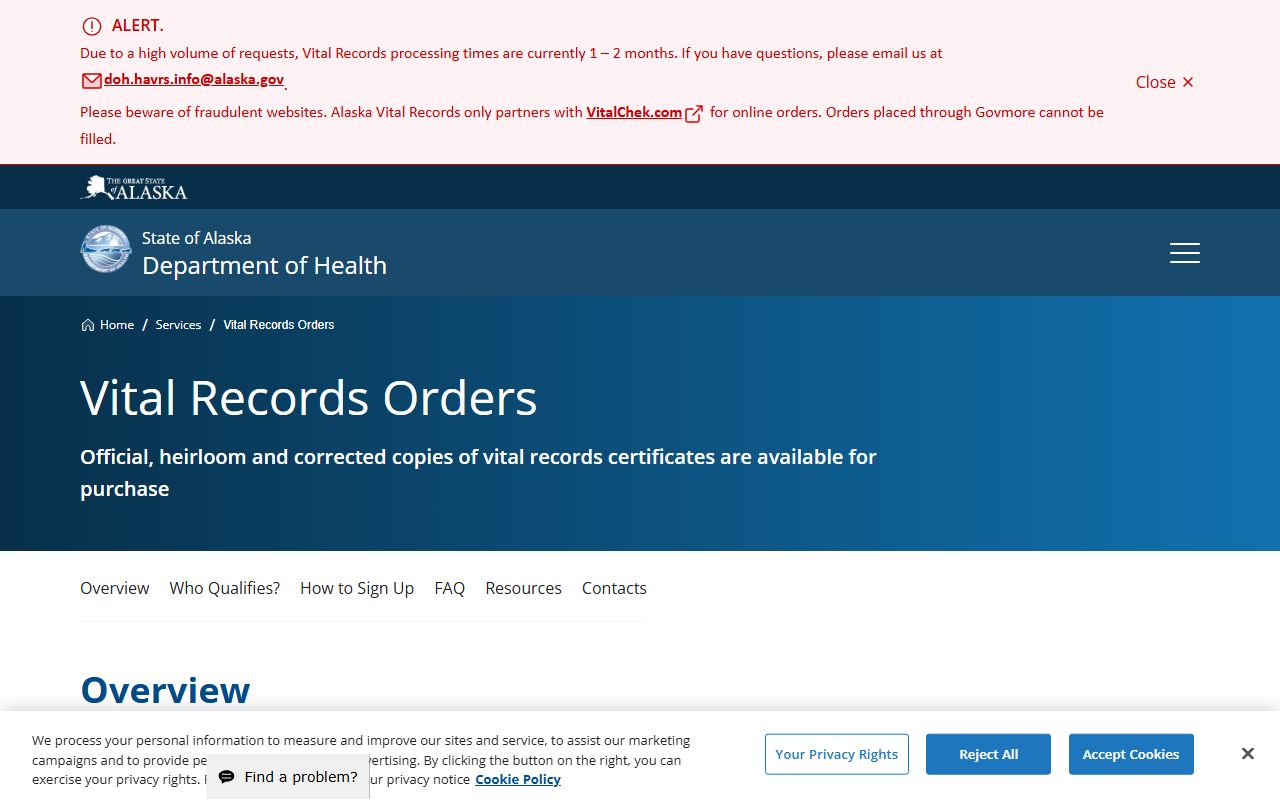
There are four ways to order a certified death certificate for someone who died in Anchorage Municipality. Walk in to the Anchorage HAVRS office at 3901 Old Seward Hwy. Order online through VitalChek. Send a completed request form by mail to Health Analytics and Vital Records, P.O. Box 110675, Juneau, AK 99811-0675. Or fax the form to (907) 465-3618. Email orders are not accepted. Use only one method per request to avoid duplicate charges.
The first certified copy costs $30. Each additional copy of the same record ordered at the same time is $25. For records being sent abroad, a death apostille costs $42 and includes one certificate. A white copy (open records copy) is $15. A basic verification match to confirm a record exists runs $2.50. For complex historical research requests, the office charges $75 per hour. These fees apply statewide and are the same whether you are ordering from the Anchorage office or the Juneau office.
Processing times vary. Walk-in visits offer the fastest turnaround. VitalChek online orders process in 2 to 3 weeks for standard requests and 3 to 4 weeks when expedited. Mail and fax submissions take considerably longer, often 2 to 3 months. Requests cannot be filled until the record itself has been registered, which may take up to 3 months after the death occurs. Plan ahead if you need a certificate for a legal deadline.
Each requester must submit a government-issued ID with the application. Acceptable forms include a driver's license, state ID card, passport, military ID, or a tribal or BIA card. The form must be signed. Unsigned submissions are returned unprocessed.
Anchorage Coroner Records and FamilySearch Collections
For historical research, Anchorage Municipality has several notable collections. The most distinctive is the Alaska, Anchorage, Coroner's Records (1900-1959) available through the FamilySearch Catalog. These records document deaths investigated by the Anchorage coroner's office during the first six decades of the 20th century. They predate many of the formal vital records systems and capture deaths that might not appear in the standard vital statistics registry.
A second collection, the Alaska, Tanana Precinct, Birth, Marriage and Death Records (1917-1971), also available through the FamilySearch Catalog, covers the broader region and includes Anchorage-area records from the territorial and early statehood period. The Bureau of Vital Statistics has maintained statewide death records since 1913, though registration before 1930 was inconsistent. Researchers studying the early Anchorage period should check both the coroner records and the Tanana precinct collection for overlapping coverage.
FamilySearch also holds the statewide Alaska, Vital Records, 1816-2005 collection, which draws from multiple original sources. The Alaska Vital Records guide at FamilySearch explains what is available for each period and region. For Anchorage specifically, the combination of coroner records, precinct records, and the broad vital records collection gives researchers several access points when a record is missing from one source.
Anchorage Public Library Obituary Index and Burial Records
The Anchorage Public Library maintains two useful local resources. The first is the Anchorage Obituary Index Online, which covers January 1, 1981 through October 1, 2001. This index is searchable and provides a quick way to confirm death dates and find newspaper references. For obituaries filed after October 2001, the library holds print newspaper obituary indexes in the Alaska Collection, available for in-person research.
The second resource is the Memorial Park Cemetery Master Burial List, which is searchable by last name. This list provides burial location information for the city's main municipal cemetery. It can help confirm a death and point toward a death record when you know a burial location but lack other details.
The Anchorage Genealogical Society also supports local research. The society can be reached at PO Box 212265, Anchorage, AK 99521. Members can help with research strategies and may have access to local collections not widely indexed online. For genealogists working on Anchorage-area family histories, the society is a good local contact.
Note: The Anchorage Obituary Index covers 1981 to 2001 only; for deaths outside that range, the Alaska Collection print indexes or statewide vital records collections are the next step.
Eligibility and Privacy Rules for Anchorage Death Records
Under Alaska Statute AS 18.50, death records are restricted for 50 years from the date of death. Records from before 1975 are now publicly available. Anyone can order them without proving a family relationship. For deaths recorded after 1975, access is limited to eligible requesters.
Eligible requesters include the spouse named on the death certificate, parents of the decedent, children of the decedent, siblings, legal guardians, attorneys acting on behalf of an estate, and government agencies with an official need. Each of these categories requires supporting documentation in addition to a government-issued ID. For example, a child of the decedent must provide a copy of their own birth certificate showing the decedent as a parent if that birth was not registered in Alaska. Attorneys must provide a cover letter, client agreement, and documentation showing why the certificate is needed for property or estate purposes. Faxed supporting documents are not accepted from attorneys; originals or certified copies are required.
The same rules apply whether you are requesting a record for a death in Anchorage, Fairbanks, or a remote census area. The access policy is set at the state level and does not vary by location.
Alaska State Archives and Additional Research Tools
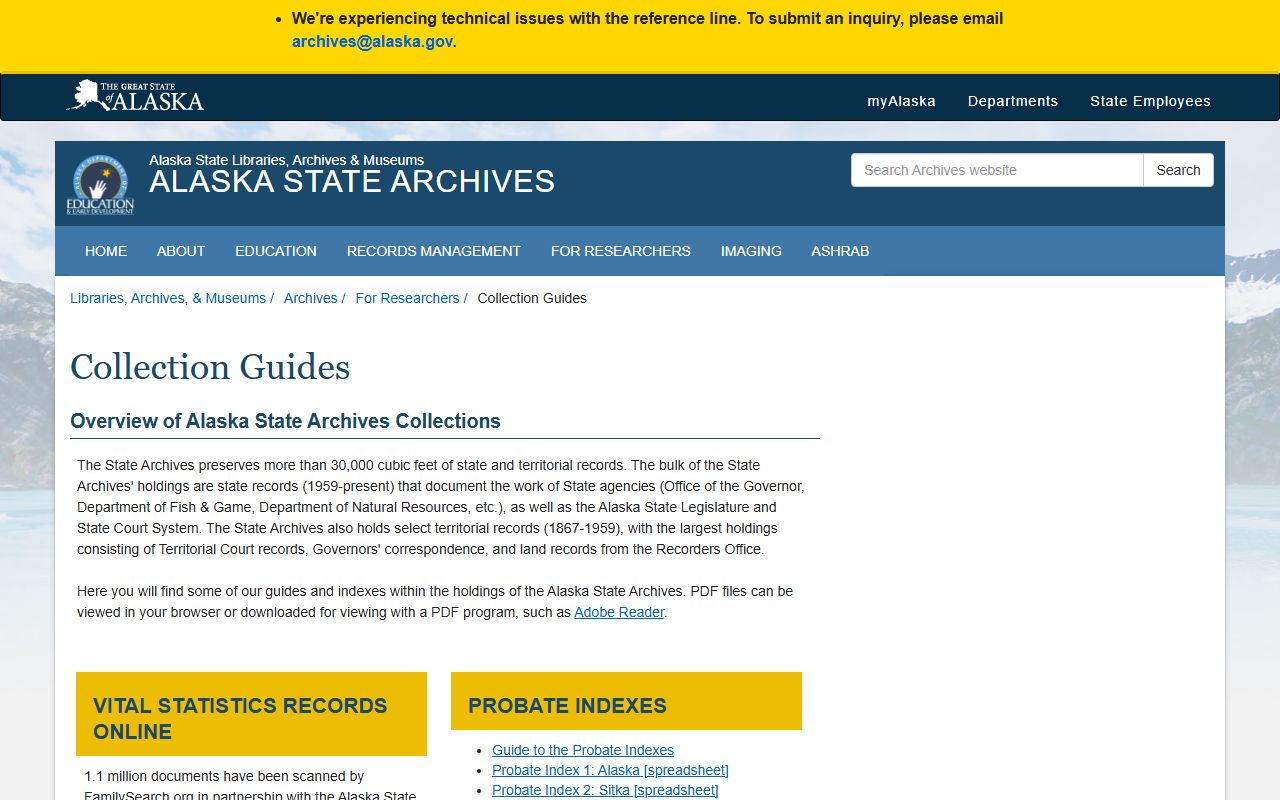
The Alaska State Archives in Juneau holds the territorial-era records that predate the modern HAVRS system. For Anchorage researchers, the Archives is the place to go for records from before 1959, when Alaska became a state. The Archives-FamilySearch partnership has digitized a large portion of these older records, making them accessible without a trip to Juneau.
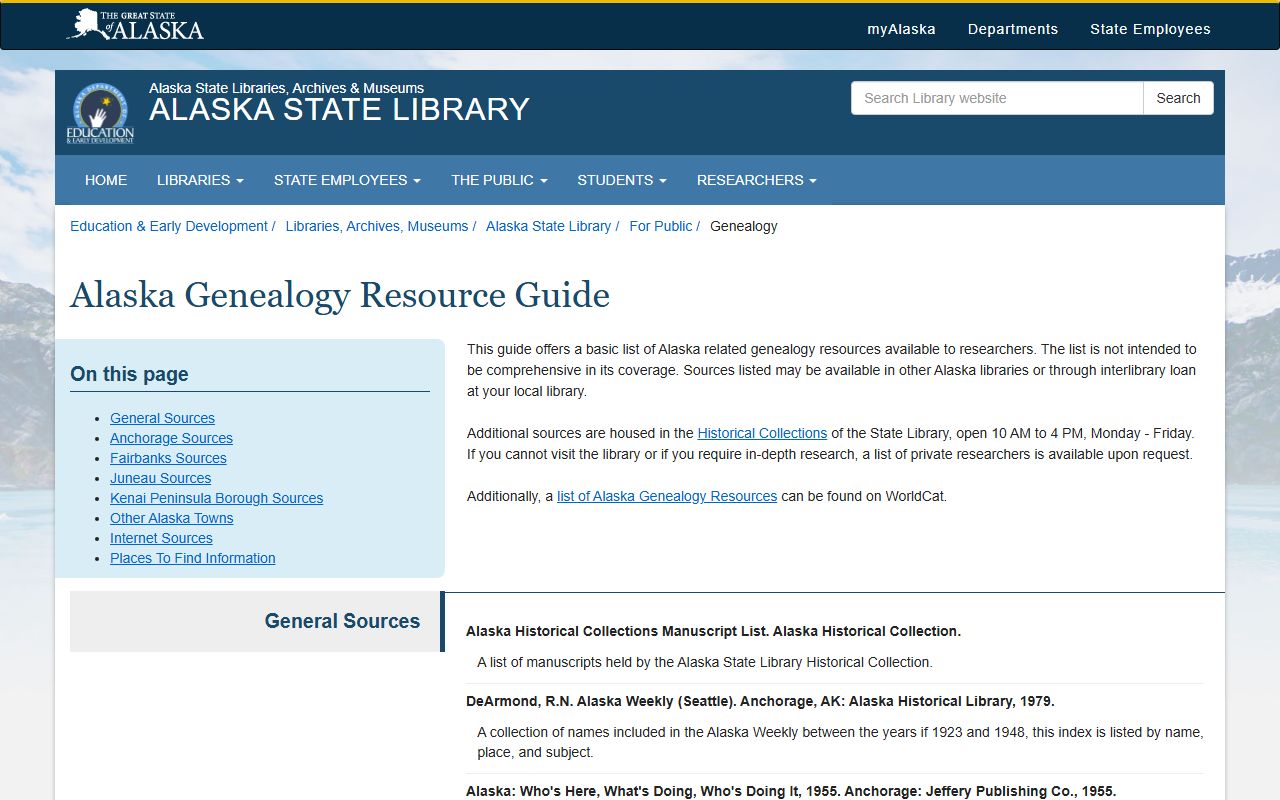
The Alaska State Library's genealogy resources page at library.alaska.gov lists research guides, databases, and links to historical collections. The State Library collection complements the Archives and holds non-government materials like newspapers and periodicals that often contain death notices and obituaries not captured in the official vital records system.
Cities in Anchorage Municipality
Two cities within Anchorage Municipality have their own death records pages with local resources and details.
Nearby Boroughs
These boroughs border Anchorage Municipality and follow the same state-level vital records process.